Godzilla (2014)

I was into plenty of nerdy crap growing up, but I never got into the Godzilla movies at any point in my childhood, despite having them constantly showing up on Saturday afternoon TV and always staring me in the face at the video store. I don’t think I ever actually sat through any of the old Toho Godzilla films, not even the original, at any point. In fact, as ashamed as I am to admit this, the first Godzilla movie I ever watched was the 1998 abomination starring Matthew Broderick. So my introduction to the King of the Monsters was, uh…misguided.

Nonetheless, I had been enthusiastically looking forward to Gareth Edwards’s reboot of the big fella ever since the first trailer hit last year. Despite not ever getting into the franchise as a kid, I was excited for this one for the simple fact that it promised to satisfy my recurring need to see giant monsters beating the hell out of each other for two hours on a big screen. On that level, it most definitely succeeded.

Godzilla brings the big, bad King of the Monsters back to his roots, and plays less like a reboot of the franchise and more like a loving tribute to the many Toho films that featured the characters throughout the decades. The standard elements are all here: the monster-fueled mayhem, the massive destruction of entire cities, the fleeing hordes of people, and the scientists and military personnel who throw in everything but the kitchen sink in a totally unsuccessful attempt to kill the big guy. It’s a Godzilla movie at heart, and a vast improvement over the 1998 Roland Emmerich version that was basically a crappy Jurassic Park sequel (thankfully, the real Godzilla kicked the crap out of that lame guy a few years ago).

While Godzilla contains the requisite amount of monster mayhem, it’s also refreshingly grounded, or at least as grounded as a movie about a giant, fire-breathing lizard can possibly be. As opposed to the general mindfuckery of many of the Toho movies, this film presents a fairly realistic setting in Tokyo and San Francisco, and drops monsters into it, with its human characters acting pretty much as you’d expect them to. There are no magic pixies or trips to Monster Island. Godzilla doesn’t fly to the moon to save the Earth from aliens. The film lives up to the standards of the monster flick without wandering into the completely ridiculous or cliched, and that’s why it works well.

Director Edwards also channels his inner Spielberg by holding of on showing Godzilla in full until the second half of the film. Some fans were put off by this, but I thought it helped build up our expectations for when he finally arrived and started tearing shit up. In movies like this, you can’t really reveal too much too early, or else the film can become monotonous and lack suspense. By not playing his cards too early, Edwards keeps his audience in anticipation until the inevitable final confrontation between Godzilla and the film’s other gigantic monsters, and boy is it a doozy.

Godzilla is a solid three star film, a giant monster movie at heart, but made with enough skill and faithfulness to the original material to let it rise above something more than throwaway summer movie junk. After so many decades, it’s nice to see the big guy finally get an American-produced film worthy of his name. And Cranston. There will always be Cranston.

Posted in Movies | Tagged , , | Leave a comment

Ranking the Tarantino Films

I re-watched Django Unchained recently and it got me all inspired to finish up something I’ve been contemplating for a while now: a ranking of Quentin Tarantino’s films, from the best to the worst. I’ve often found that I enjoy each Tarantino movie a lot more the second time around, most likely because I have another opportunity to take in the numerous nods to old cult films that pepper each of his works. For instance, when I first watched Kill Bill Vol. 1, the constant allusions to the cheesy spaghetti western Death Rides a Horse were completely lost on me. When I later watched Death Rides a Horse (and loved it), then later watched Vol. 1 a second time, my enjoyment of the movie escalated a thousandfold.

Tarantino, of course, is one of Hollywood’s foremost autuers, and he happens to be one of my personal favorite filmmakers (and I’m hardly alone in that). As any fan of his can tell you, his films are distinctive for their hip, smart dialogue, myriad references to past pop culture, and their tendency to be extremely (and often almost cartoonishly) violent.

Each of Tarantino’s films are odes to the movies (mostly exploitation or drive-in cult movies) that inspired him as he grew up. His early works borrow heavily from French New Wave films by directors such as Francois Truffaut and Jean-Luc Godard. His later movies have tilted more toward homages to kung fu films and cheesy ’60’s spaghetti westerns. Due to their violent nature and coarse language, Tarantino’s films are almost always controversial, but even his most vocal critics can’t deny that they’re unique, especially in this age of never-ending reboots and retreads.

This ranking only applies to the full-length features that Tarantino has directed. True Romance and From Dusk Til Dawn are both amazing movies which he scripted, but since he wasn’t behind the camera for those, they aren’t included. Also, I obviously didn’t include the sequences in Four Rooms and Sin City which he directed, nor, God forbid, My Best Friend’s Birthday. Enjoy!

8. Death Proof

I admit I haven’t watched this since it first appeared in theaters in 2007, and frankly I have absolutely no desire to watch it again. I nearly walked out of the theater the first time I saw it. Tarantino’s entry in the Grindhouse double feature (along with Robert Rodriguez’s Planet Terror) is an utter slog, a long, boring mess until an exhilarating final fifteen minutes or so that don’t even come close to redeeming the movie. The plot centers around Stuntman Mike (Kurt Russell), a deranged stunt car driver (Kurt Russell) who is invincible as long as he stays behind the wheel of his Chevy Nova. He targets and kills pretty young girls, but eventually he screws with the wrong group of ladies and ends up getting his ass handed to him by a trio of free-spirited chicks on a roadie.

Tarantino falls victim to his worst indulgences in this one, as in a scene where the four female leads engage in catty banter in a restaurant for twenty straight minutes, which should lead any moviegoer sprinting for the fire exits. The overall result is basically unwatchable. The Grindhouse films were meant as a tribute to the gory exploitation double features of the ’60’s and ’70’s. Rodriguez made Planet Terror over-the-top and entertaining. Tarantino made this one stupid and boring.

Best scene: There aren’t a whole lot, but the film’s final chase sequence, featuring real life stuntwoman Zoe Bell clinging to the hood of a speeding Dodge Challenger, is undeniably awesome.

7. Jackie Brown

Tarantino’s only film thus far that was taken from a source other than one of his own original screenplays (it was adapted from an Elmore Leonard novel), and that’s probably why it seems like his most, dare I say it, conventional. Jackie Brown serves essentially as a showcase for Pam Grier, the star of so many blaxploitation films from the 1970’s (which this film pays tribute to), and that certainly isn’t a bad thing. The film retains Tarantino’s gift for colorful dialogue and is certainly watchable, but it goes on too long and there’s not a lot to distinguish it from any other late-90’s crime drama, much less any of Tarantino’s other work.

Best scene: Samuel L. Jackson trying to explain to Chris Tucker why he should climb into the trunk of his car for a rendezvous with some Chinese gun dealers. Note: never let Samuel L. Jackson convince you to climb into the trunk of his car for any reason.

6. Kill Bill Vol. 2

The second act of Tarantino’s revenge saga is a lot talkier than its predecessor and, as a result, doesn’t live up to the lofty standard set by Vol. 1. It takes place right where the first movie left off, with Uma Thurman’s revenge-hungry bride Beatrix Kiddo going after the two assassins she didn’t knock off in the first film. Vol. 2 moves at a much more leisurely pace, and anyone expecting the supercharged, non-stop action of Vol. 1 is going to be sorely disappointed.

On its own, though, it’s a clever tribute to the spaghetti western genre, with the requisite Ennio Morricone cuts all over the soundtrack. Every frame is basically one pop culture reference or another, and David Carradine’s charming but sadistic Bill foreshadows another of Tarantino’s great villains, the “Jew Hunter” from Inglorious Basterds.

Best scene: The hilariously cramped trailer battle between Beatrix and one-eyed (soon-to-be no-eyed) Elle Driver (Darryl Hannah).

5. Django Unchained

Tarantino tackles slavery this time, as Jamie Foxx plays Django, a slave freed by bounty hunter Christoph Waltz who joins his rescuer by going into business killing bad guys for money. When he learns his wife is in the clutches of slimy plantation owner Calvin Candie (played by Leonardo DiCaprio), he and Waltz develop a scheme to try to rescue her. Waltz more or less takes over the film here, charmingly playing a character who is essentially the moral antithesis of his “Jew Hunter” from Inglorious Basterds. Django is bereft of the types of brilliant scenes that characterize Tarantino’s best, and the ending is standard revenge movie bloodletting, not nearly as clever or inspired as Tarantino’s better movies, like Basterds.

Best scene: Calvin Candie’s disturbing phrenology demonstration on the skull of a dead slave that inevitably leads to a horrifying confrontation between Candie, the bounty hunters, and Django’s wife.

4. Inglorious Basterds

Tarantino’s World War II saga, centering around a platoon of Jewish-American soldiers whose mission is to go behind enemy lines to kill German soldiers and collect their scalps. The film gleefully rewrites history, with Hitler getting machine gunned to death at the end and the rest of the Nazi higher-ups getting blown sky high in a movie theater. The movie is basically a collection of different story lines concerning plots by various players to assassinate Hitler, all of which come together at the film’s climax. Several scenes are absolutely brilliant, particularly one incredibly intense sequence (featuring Michael Fassbender) in which a spy rendezvous in an underground tavern goes horribly, horribly wrong. Parts of Basterds are definitely better than the whole, but all in all it’s a deliciously original war movie.

Of course, the actor who steals the whole show is Christoph Waltz, playing SS Colonel Hans Landa (aka “The Jew Hunter”), who immediately became one of the best movie villains of the past thirty years. Despite his repugnant task of tracking down and eradicating fugitive Jews, Waltz’s character is so cheerful, professional, and unfailingly polite, that you start to genuinely like the guy…at least until he orders the cold-blooded execution of a Jewish family or brutally strangles a female spy to death.

Best scene: The basement standoff is a gem, but it’s tough to beat the almost unbearable tension in the film’s opening scene (which pays homage to The Good, the Bad, and the Ugly), when Colonel Landa diabolically breaks down a French farmer into admitting that he is hiding a Jewish family underneath his floorboards.

3. Pulp Fiction

Told in similar non-linear style as Reservoir Dogs, this is considered by many to be Tarantino’s best. Pulp Fiction, which gives us several memorable accounts of various low life denizens of L.A., doesn’t move quite as fast as Dogs, but it is much more polished. Many of Pulp Fiction‘s scenes have, understandably, become iconic, and the film is generally hailed as a modern classic.

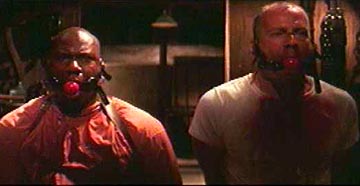
The more famous moments include an awkward “date” between hitman John Travolta (whose career was resurrected by this movie) and mob boss sweetheart Uma Thurman, Samuel L. Jackson quoting the Book of Ezekiel before blowing away a group of clearly in-over-their-heads mob bagmen, and Bruce Willis’s and Ving Rhames’s ill-fated foray into a dank gun shop. In addition, who could forget Christopher Walken’s rather creative method of smuggling a watch out of a POW camp in Vietnam, or Tarantino himself playing Jimmie of Toluca Lake, who just wants a dead body out of his house before his pissed-off wife comes home?

Best scene: There are so many classic moments, but the film’s final scene, where two would-be robbers run afoul of Samuel L. Jackson while trying to stick up a restaurant, is one of the great things you’ll see in film.

2. Reservoir Dogs

The most quotable of all of Tarantino’s films, and probably one of the most quotable movies of all time. Tarantino’s first film is also his most raw, filmed on a low budget and taking place mostly in an abandoned garage, at times playing like a three-act stage play. This story of a group of bank robbers trying to figure out who ratted them out after a heist gone wrong is a violent but incredibly stylish tribute to French New Wave filmmakers from the ’50’s and ’60’s. With this film, Tarantino’s gift for dialogue was evident from the start, and the memorable lines are countless.

It wouldn’t work without skillful performances, and a knockout cast (including real-life tough guy Lawrence Tierney as the group’s ringleader) breathes life to the snappy dialogue to give viewers what amounts to an ensemble acting tour de force. We’re given a treasure trove of classic characters, each identified only by a different color, i.e. Mr. White, Mr. Pink, etc. It’s a true bloody gem.

And remember, in the words of the inaptly-named Nice Guy Eddie: “You beat that prick long enough, he’ll tell you who started the goddamned Chicago fire. That doesn’t necessarily make it fuckin’ so!”

Best scene: Mr. Pink (Steve Buscemi) explaining to his comrades why he is morally opposed to tipping waitresses in restaurants. This part is legendary, and vintage Buscemi.

1. Kill Bill Vol. 1

Pulp Fiction gets most of the plaudits for being Tarantino’s magnum opus, but I consider Kill Bill Vol. 1 to be his masterpiece. A high-energy tribute to chop-socky films of the ’70’s, the film centers around spurned (to say the least) bride Beatrix Kiddo’s one-woman mission to, well…kill Bill, along with the rest of his assassin squad, who left her for dead after slaughtering her fiance and unborn baby.

Vol. 1 features just the right blend of Tarantino’s typically-smart dialogue, stunning action sequences, and eye-popping cinematography to make it the director’s best film both on an artistic level and for sheer entertainment. Packed to the brim with references to old western and kung fu films (Uma Thurman’s now-iconic motorcycle suit in the final act is itself a tribute to the Bruce Lee film Game of Death), and featuring a career-defining performance from Thurman, Kill Bill Vol. 1 is, quite simply, exactly the kind of experience we desire when we go to the theater to enjoy movies.

Best scene: Uma Thurman’s epic battle with the Crazy 88’s, in all its bloody, ankle-slicing glory, is one of the best action set pieces in recent memory. Not to mention, it’s all done practically, without aid of computer-generated effects, a welcome change in an era oversaturated with (often bad) CGI-aided action sequences.

Posted in Movies | Tagged , | Leave a comment

Paul’s Totally Accurate, Infallible 2014 Baseball Predictions, National League Edition

It must be spring, and it must be time for the baseball season. How do I know? Well, the atmosphere is rife with all the usual signs of springtime and the onset of Opening Day baseball. Cadbury eggs are starting to go into circulation again. Roughly ten NBA teams are openly and shamelessly tanking for more lottery balls in this summer’s draft. We’re beginning to get pelted with trailer after trailer for upcoming summer blockbusters, which  feature the latest offensive reboot. The sun is shining (actually, here in Sacramento it’s overcast), the birds are singing, bees are buzzing, and the Boys of Summer are ready to rev up for the best six months of every year: the 162-game baseball season.

Of course, with the start of the baseball season comes the inevitable baseball prediction post. What I love most about these prediction articles is that it’s a no-lose situation. If your predictions turn out to be all wrong, well, baseball’s just an inherently unpredictable sport (you just can’t predict it, don’tcha know?), and preseason prognostication is just a silly, pointless exercise, and don’t we have computers to do this for us anyway? Giant supercomputers that can spit out Mike Trout’s 15-year forecast in the time it takes me to type the last two words of this sentence? So who cares if I’m horribly wrong when real players are going to be replaced by the rosters of Basewars, anyway? I, for one, welcome our new war robot overlords.

However, if my predictions turn out to have even a modicum of accuracy, well, I’m clearly a genius and Jeff Luhnow needs to hire me ASAP so I can be the first of this supposed new wave of MLB front office-types who are going to be making millions, just like the players. Finally, all those hours spent obsessing over the 1988 Montreal Expos (as opposed to, you know, “socializing” with the “real world”) are going to pay off!

Whether or not my predictions come true and I can flaunt my baseball acumen to the unsuspecting world, this is a fun annual exercise. Even though they can tend to blend together, I always enjoy the baseball predictions on the various websites. We’ll start today with my National League predictions, and then I’ll have the American League up sometime before Monday.

National League East

1. Washington Nationals

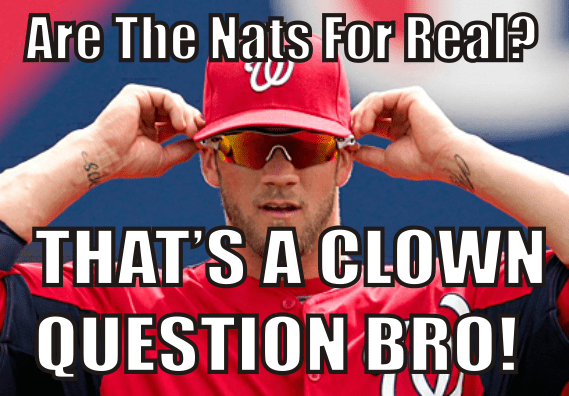
Not only are the Nationals the clear favorite to win the NL East, they’re probably the only team with a shot at eclisping 100 wins. They stumbled out of the gate last year, and that led to a disappointing season, but that shouldn’t fool you. They have a true ’86 Mets thing going on here (including a Dykstra-esque player in Bryce Harper, in that everybody seems to hate him, for some reason). They have a collection of young, homegrown talent (Harper, Stephen Strasburg, Ian Desmond) that’s about to come together with a huge bang. They have capable veterans (Jayson Werth, Gio Gonzalez, Doug Fister) surrounding the young stars. They have the hitting, pitching, and a new manager in Matt Williams who has indicated that he’s going to be a more progressive field leader. If it all comes together, and it might this year, they’re easily the best team in the NL, and my pick to go to the World Series.

2. Atlanta Braves

On March 1st, on paper, the Braves looked like they could have traded body blows with the Nationals in the NL East and come away the winner after twelve rounds. However, after the one-two gut punch of losing both Kris Medlen and Brandon Beachy to Tommy John surgery, their odds of beating the Nats fall into the “no chance in hell” category. The injuries to Medlen and Beachy (and Mike Minor is also hurt) have thrown Atlanta’s rotation into a state of flux, to where they’re now having to rely on Aaron Harang and 26-year-old Princeton rookie David Hale to round out their starting staff. They’re also banking on Chris Johnson hitting .321 again, and hoping that batting glove-less Evan Gattis can replace the departed Brian McCann’s production while being semi-functional behind the plate. Oh, and they’re hoping that B.J. Upton and Dan Uggla can recover from their utterly disastrous 2013 seasons. Good luck with all that.

3. New York Mets

The Mets have been a running joke basically since the moment that Carlos Beltran decided not to swing at an Adam Wainwright curveball in Game Seven of the 2006 NLCS. Since then, assorted Wilpon- and Madoff-related off-field issues have turned the on-field product into a laughingstock, and not the lovable kind like in the 1960’s. The sight of Bartolo Colon running the bases this year will only add to the hilarity, but the Mets have quietly put together a team that could theoretically land in second place this year and, if everything breaks right, potentially fight for a Wild Card. Even with the additions of Curtis Granderson and Chris Young (who was awful last year), their offense is still a mess. Their rotation, though, has the makings of one of the tougher units in the NL. Colon and Zack Wheeler are polar opposites in terms of age (and, um, conditioning), but they offer a formidable one-two punch. Top prospect Noah Syndergaard should be up near midseason to provide the Mets with another exciting young gun. If only Matt Harvey hadn’t gotten hurt, then things would have been really interesting.

4. Philadelphia Phillies

I’d argue that the Phillies are even more embarrassing than their NL East division-mates, the Marlins. The Marlins are terrible, but they aren’t even trying to win, so at least they have an excuse. The Phillies, meanwhile, have thrown one ill-advised contract after another at past-their-prime players in a quixotic quest to contend. The Ryan Howard contract has been and will continue to be an albatross, they signed Marlon Byrd to a highly questionable two-year deal, and Jimmy Rollins, the franchise icon of the past decade or so, is butting heads with manager Ryne Sandberg. Oh, and amidst all this, their general manager loves to flaunt his willful ignorance towards anything statistic-y. The only saving grace could be their top three of Cliff Lee, Cole Hamels, and A.J. Burnett, but they’ll have to all produce the season of their lives to salvage this mess.

5. Miami Marlins

Not so much a baseball franchise as a money laundering scheme. The Marlins should just do us all a favor and trade Giancarlo Stanton to a team that gives a shit so he can get on with his career and we can get on with our lives. In Jose Fernandez and Christian Yelich, the Marlins have some legitimately great talent already on their major league roster, and more hot prospects down on the farm. However, the way this franchise operates, those players will probably just be dealt for another bushel of A-ballers once they hit their first arbitration year, so who the hell even cares? The Marlins aren’t even bad in a fun, colorful way. They’re just offensive. Not offensive as a baseball club, but offensive as a concept. And if you don’t want to punch team president David Samson in the face after this, there’s something wrong with you.

National League Central

1. St. Louis Cardinals

Easily the most balanced team in the NL, and perhaps the best-run franchise. The Cards always seem to get things done despite never being in the headlines for shelling out money for big names. They find impact players through trade or via their ever-replenishing farm system, and just keep competing, year after year after year. The losses of David Freese and Carlos Beltran could hurt them in the run-scoring department, but watch out for Oscar Taveras, who could replace Matt Adams sometime this year and who projects to be an All-Star many times over. Taveras is an example of why the Cardinal lineup perennially functions like a Great White Shark’s teeth: lose one star hitter, and up immediately pops another from the farm system.

Also, don’t overlook the addition of Peter Bourjos, who is one of the absolute best defensive players in the majors. He could have a major impact on the Cards’ run prevention abilities, and fly ball pitchers Lance Lynn, Michael Wacha, and Shelby Miller should learn to love him in a hurry.

2. Milwaukee Brewers

Call me insane, call me irrational, call me ripshit drunk, but don’t call me conventional. This is my bold pick for the preseason, that the Brewers will not only finish above the Pirates and Reds, but also contend for a Wild Card. The Brewers have assembled a quietly effective pitching staff to support a lineup that could be among the best in the league. Ryan Braun’s general asshat-ery will get all the headlines, but the star of this team is Carlos Gomez, who has quietly become one of the top all-around players in baseball. The Lyle Overbay/Mark Reynolds first base tandem never goes well for anybody (just ask the Yankees), so that’s a concern, but this team is very strong up the middle with Gomez in center, Jonathan Lucroy at catcher, and Jean Segura at short. They’re my dark horse playoff pick.

3. Cincinnati Reds

Much of the Reds’ season hinges on just how well speedster Billy Hamilton functions in the leadoff spot. If he hits .320, steals 70-80 bases, and gets into the opposing pitchers’ head every time he gets on base, the Reds have themselves a full-blown catalyst and in turn should be able to withstand the loss of Shin-Soo Choo. If Hamilton OBPs .290 and plays like the second coming of Gerald Young, then the Reds might be screwed. Behind Joey Votto and Jay Bruce, they have a righty-heavy lineup that can’t exactly mark down getting on base as a strong suit. Their pitching got weaker as well with the loss of Bronson Arroyo, so they’ll need Mike Leake to repeat his surprising 2013 (unlikely) and Tony Cingrani to prove he can handle a full season’s workload (more likely). With decliners like Ryan Ludwick and Brandon Phillips (though he denies it!), they look like a prime candidate to disappoint.

4. Pittsburgh Pirates

I love that the Pirates are relevant again, but I think the Plexiglass Principle is going to hit them hard this season. For starters, they won’t have A.J. Burnett’s innings anymore, and they certainly won’t get another 109 All-Star-caliber innings from Jeff Locke, as they did in the first half last season. Second, it’s anyone’s guess if Francisco Liriano can stay both healthy and effective again; last year was the first time in a long time that he was both for any stretch of time. Lastly, they’re platooning Gaby Sanchez and Travis Ishikawa at first base, for heaven’s sake. The Pirates are definitely a team on the rise, and they have a lot of help coming in the near future from the farm, but the smart money is on regression this year. If the Pirates are Arcade Fire, then 2013 was Funeral, the coming-out party. 2014, then, is destined to be the Neon Bible disappointment. Just watch out for the incredible The Suburbs in 2015, which means maybe a brilliant Reflektor/World Series title in 2016.

5. Chicago Cubs

One of the hardest parts of being the general manager of a major league team, I assume, is having to balance the best interests of the team with the often-lunatic demands of fans and media. Noted curse-breaker Theo Epstein was carried into Chicago on the shoulders of an eternally-suffering fan base, but now, just two years into his tenure as the man at the top of the Cubs, those same fans are basically calling for his head. And the sad thing is, his process has been sound; the fans just don’t give a crap. They (and the writers…always the writers) want results, and they want them yesterday.

Epstein watched as two of his budding superstars, Starlin Castro and Anthony Rizzo, flopped completely last year, and now those two are just two more question marks as the rebuild process lurches on. With Javier Baez, Kris Bryant, Albert Almora, and Jorge Soler coming up the pipeline, the Cubs don’t stand to be bad for too much longer, but it’s already been longer than the Windy City faithful would like. Everybody outside of Chicago still has confidence that Epstein knows what he’s doing, but the 2014 product is still going to be stomach-churning. See ya in 2015, Cubbies.

National League West

1. Los Angeles Dodgers

The Dodgers may be taking the C. Montgomery Burns approach to winning, and they may have reaffirmed their long affiliation with Satan, but they’re definitely the team to beat in the NL West. Basically, a lot would have to go wrong for the Dodgers to cough up this division. What could go wrong, you ask? It’s hard to say, or at least hard to say what combination of calamities would keep the Dodgers out of October. Perhaps Yasiel Puig implodes and proves he’s a flash in the pan, or perhaps he becomes so much of a problem in the clubhouse that he brings the team down from within (though I’m convinced that much of the “Puig-as-cancer” theme is blown up by L.A. scribes and fueled by quasi-racism). Maybe Hanley Ramirez sinks back to his 2011-12 self. Maybe one of their pitchers gets hurt, or maybe Dan Haren and Josh Beckett will continue to be utter disasters. Maybe Adrian Gonzalez and Carl Crawford get old and the lineup underperforms.

That’s certainly a whole lot of maybes, but if the Dodgers do struggle in the first half, I think I speak for all of us when I demand that they pull off a hilariously ill-advised trade for Alex Rodriguez to fill their 2015 third base hole.

2. San Francisco Giants

The thinking goes that if the Giants get a lot of breaks, they can contend for a playoff spot again, but I see it a bit differently. The team can’t possibly have more injuries than they did last season, when their starting center fielder and one of their starters each missed three months. When Angel Pagan was playing, it was just a totally different lineup. Matt Cain is a good bet to have a better year, Ryan Vogelsong is at least a decent bet to improve on his miserable 2013, and Tim Hudson can’t possibly be worse than Barry Zito was last season. The Giants are bound to get more firepower out of left field with Mike Morse around. So I don’t think it’s a matter of a bunch of stuff having to go right, so much as the team can’t suffer through all the things that went wrong again. If all the main guys stay healthy, they’ll be in the Wild Card hunt at the least.

3. San Diego Padres

The Padre offense is much better than you’d think. Petco Park suppresses offense perhaps more than any park in the majors, and does so to such a degree that it makes good hitters look downright vanilla. Take Jedd Gyorko, who had a fabulous rookie year in which he hit 23 home runs, but was largely ignored because his batting average was squashed by his home park.

Conversely, the Padres’ pitching staff is a lot worse than it appears. Last year, the team posted an 86 ERA+, despite a not-so-horrible-looking 3.98 team ERA. This year, if the Padres sink below .500 again, it’ll be that pitching that does them in. Behind Andrew Cashner, there are a lot of questions. Questions such as: Is Tyson Ross the real deal? Can Ian Kennedy and Josh Johnson salvage their respective careers? How does Eric Stults get batters out? I like the chances of Kennedy and Johnson having a Petco-fueled resurgence, and the offense is much better than people realize, especially if Chase Headley and Carlos Quentin can stay healthy, and if Yasmani Grandal can stay off the juice. If the starting pitching improves, they could be a 2010-ish surprise team.

4. Arizona Diamondbacks

The Snakes’ season may have been torpedoed before it even started when Patrick Corbin became the latest Tommy John patient. That deprives them of their best pitcher and forces them to turn to a lot of shaky options in their rotation. Brandon McCarthy, he of the amazing Twitter feed, was awful last season, and Bronson Arroyo’s fly ball-happy repertoire might not be a great fit in the desert. They also made some questionable offseason moves, like trading for combustible closer Addison Reed and out-maker extraordinaire Mark Trumbo. They also can’t seem to keep from taking shots in the press at former players after they’ve departed, which has gotta hurt them in the karma department, right? I’m a lot more bearish on their season than most, and see them disappointing a lot of people.

5. Colorado Rockies

I have a theory that the Rockies will never be able to see sustained success because of the toll Coors Field takes on their pitchers. Even the best pitchers they produce, the ones who have great seasons despite the altitude, are forced to throw more pitches and generally see more hitters per start, and that leads to more stressful innings and thus a higher propensity for breakdown. It happened to Jeff Francis, it happened to Ubaldo Jimenez, and it’s probably going to happen to Jorge De La Rosa, who averaged just 5.6 innings per start last year. Since the Rockies can never (and have never) been able to maintain a strong and healthy rotation for more than a year or two at a time, they have only a small window in which to compete for a title. Despite some truly dynamic star power in their lineup, that window is currently not open, and probably won’t be until Jonathan Gray and Eddie Butler establish themselves in a couple of years and give the Rocks their next two year window before breaking down.

Postseason Picks

Wild Card: Giants over Brewers

NLDS: Nationals over Giants, Cardinals over Dodgers

NLCS: Nationals over Cardinals

MVP: Carlos Gomez

Cy Young: Stephen Strasburg

Rookie of the Year: Jameson Tailon

Manager of the Year: Ron Roenicke

Posted in Baseball | Tagged , | Leave a comment

Tame the Cust

cust

The news from today that the Orioles are bringing in Jack Cust for a workout gives me the opportunity to rant a little bit about one of my favorite players of all time. In 2009, I went to the A’s home opener against the Seattle Mariners (for a complete rundown on why that whole thing was a total debacle, go and read this). At one point, Cust came up to start an inning and took a pitch on the outside corner for a called strike three. I immediately leaped up and bellowed from my lower box seat, “If Jack Cust takes it, it’s not a strike!”

My strike zone evaluation may have been fueled by one or two (or seven) beers, but it was borne of Cust’s major strength as a player: he just drew a buttload of walks. He walked 105 times in 124 games in 2007, and then drew 111 walks in a full season 2008. At that point in my baseball life, I just loved players who drew lots and lots of walks. Back then, I was smack in the middle of an obsession with Three True Outcomes guys, and I definitely sided with the movement that trumpeted that that kind of player was underappreciated in the game.

And they sure seemed underappreciated, at least at that time. In 2006, Cust played essentially the entire year with San Diego’s AAA team, the Portland Beavers. In 138 games, Cust hit 30 home runs and walked 143 times. His OBP for the season for the Beavers was a Votto-esque .467. All that got him was three measly at-bats with the Padres in September. I, along with much of the saber-community at large, wanted to see what Cust would do given a full season’s worth of playing time in the majors.

Luckily, that chance would come the following year, when the A’s acquired Cust from the Padres for some cash and he exploded, finishing at .256/.408/.504 after establishing himself in the Oakland lineup in May. In 2008, he led the A’s in home runs, with 33, and got on base a lot. In four seasons with the A’s, Cust put up a .381 OBP. He provided a lot of offensive value for relatively little expense. His success seemed to validate the idea that a Quad-A player was just a myth, and that if you could hit in AAA, you could hit in the majors.

However, there were…problems. Blinded by my fixation with Cust’s walk totals, I didn’t realize the true reason that the Padres didn’t bother giving the slugger a chance: his glove. Cust was just an absolutely terrible outfielder. I mean, you just couldn’t play him out there at all. Never mind defensive metrics; the sight of Cust stumbling around left field would make wallpaper curl. The A’s tried to hide him at DH as much as possible, but more often than not they had to start him in left field and live with it, and it got reaaaallll ugly out there.

As great a story as Cust was, he was truly a very limited player, and if the walks or power ever dried up, you weren’t left with much. Unfortunately, the A’s got to witness this firsthand. In 2010, the power started to dwindle, and Cust’s flaws became harder for the team to stomach. Suddenly they had outfielder with negative defensive value and problems making contact, who suddenly wasn’t hitting the ball over the fence. That’s a high-OBP, low-average singles hitter, friends, and that is why the A’s were totally unenthusiastic about keeping him around anymore. In fact, the A’s were so unenthusiastic about him that they had him start the 2010 season in AAA.

From 2007-2009, i.e. Cust’s good years, the A’s averaged 75 wins per season. I think that’s probably the extent of what he is: a colorful player on a bad team. When the A’s were floundering and needed a bat, they could afford to take a chance on him. When they saw red on the horizon and began to get good again (and once they started having to pay him real money), they moved on to something better.

I think the Rise and Fall of Jack Cust was the beginning of the end of my Three True Outcomes fascination. I eventually decided that walks were great and all, but sometimes you’d just rather have a guy who could hit make bloody contact. That wasn’t necessarily synonymous with a wild, brainless hacker, and I eventually realized that. Ten years ago, I would have gone ape over a season like Adam Dunn just had (.219 batting average but 34 home runs and walks!!!!), but nowadays I know that he’s just barely playable. I think I got a little too caught up in the “OBP revolution”, and began to get a bit confused as to what truly constituted a good hitter. It wasn’t solely limited to drawing a crap ton of walks and whiffing every third at bat.

I don’t know what the Orioles think they can get from Cust, who turns 35 this Thursday. Definitely not Gold Glove outfield defense. Their DH situation looks pretty lacking (it projects as Nolan Reimold or bust as of now), so I guess they’re grasping at dirt cheap straws, hoping Cust could be the high-OBP side of a DH platoon. Fair enough. This is the team that gave Nick Johnson a try in 2012 after he looked completely finished (and as it turned out, he was).

Cust hasn’t sniffed the majors since 2011, when he was horrible with the Mariners. Hopefully he gets another chance, and hopefully he hits his way on to the Orioles’ Opening Day roster. Because Cust may be flawed, and he may be frustrating, but he’s definitely fun.

Posted in Uncategorized | Tagged | Leave a comment

Just Another Guy and His Theoretical Hall of Fame Ballot

bonds

I don’t have a Hall of Fame ballot. Shocking, I know. Until the BBWAA comes to its senses and recognizes the brilliance of this poorly maintained and brutally underutilized blog, however, I’ll just have to work in the fantasy world. So here it is, for your reading pleasure, my fake Hall of Fame ballot.

As I’m sure you know, the Hall of Fame voting process is quickly turning into a farce, with many writers and former columnists essentially using their ballot as a platform to voice some sanctimonious or ideological opinion. It’s become less about who the best players are and more about my way of thinking about the game is better than your way of thinking.

One writer sold his ballot to Deadspin. Another wrote a pouty blog post about how he wouldn’t vote anymore because people on the Internet were being a bunch of meanie-heads. One refused to vote for Greg Maddux because he refuses to vote for any player in the Steroid Era, no matter what. Another submitted a ballot with only six names, leaving off three players whom he had voted for last year, for reasons no one can explain.

It’s really become silly. Everybody has their pet player and can vehemently argue, point by point, why said player is better than that other guy’s pet player (mine is Ted Simmons. Why one of the ten best catchers in history can’t get into the Hall of Fame, I’ll never know). Every year around this time, articles get written, many writers get very angry about stuff, the vote is tallied, and then we forget about it for another year.

Basically, we’re almost at the point where many, many people are going to stop taking the Hall of Fame seriously. The steroid flap has only made it worse, but maybe that’s a good thing. Maybe then we won’t have to read 800 articles a week on why Jack Morris is or isn’t a Hall of Famer, and why you’re a stupid idiot if you think differently. Maybe then we won’t get articles from voters who are submitting a blank ballot to make a “point”, apparently not realizing that no one gives a shit about their “point”. So yes, maybe it will be a good day when we all stop taking this whole thing so very seriously.

So with that out of the way, here is my Hall of Fame ballot if I had a vote. I’m sticking to ten slots because that is, ridiculously, the maximum that BBWAA voters are allowed to put on their ballots. Keep in mind that if you disagree with any of my choices, I’m just going to brand you history’s greatest monster and go pout in front of my Bill James Historical Abstract.

1. Barry Bonds

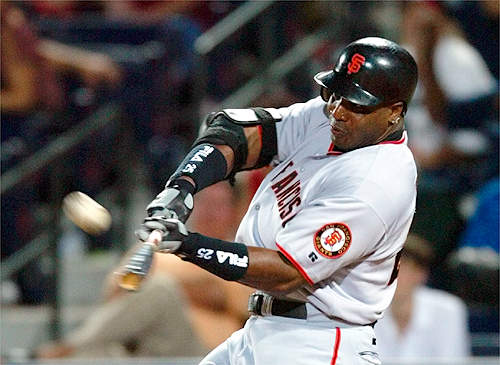
PEDs or no, Bonds was the most iconic player of his generation, and he has a legitimate claim as the greatest hitter in baseball history. He was Hall-bound even before he beefed up in 1999, supposedly by chemically-enhanced means. If he isn’t in the Hall of Fame, there’s no point in even having the damn thing.

2. Roger Clemens

If Bonds was the most iconic position player of his generation, then Clemens was the most iconic pitcher. Similar to Bonds, a decent case could be made that Clemens is the greatest pitcher in the history of the sport. He posted an ERA+ over 200 three times, and one of those was in his age-42 season. Ridiculous. Again, if he isn’t enshrined, there’s no point in taking the Hall seriously.

3. Greg Maddux

The ballot’s best pitcher, non-PED division. Maddux would sail in unanimously if it weren’t for a collection of assholes who believe that no player should ever be inducted with 100% of the vote. Maddux’s two best seasons were probably 1994 and 1995, when he put up a combined 265 ERA+ (!). In 1992, Maddux allowed seven home runs in 262 innings, despite pitching most of his games at Wrigley Field, a homer-friendly park. In ’94, he allowed four dingers in 202 innings. This, of course, being right when home run totals were beginning to skyrocket. That’s unbelievable.

4. Tom Glavine

He isn’t seen as a shoo-in Hall member, for reasons I don’t fully understand. He was a legitimately great pitcher in his peak years, which included two Cy Young Awards and a dominant performance in a World Series-clinching game. He also has the longevity, racking up 304 career wins. The Braves rotations that he was a part of in the mid-to-late 90’s were some of the best in history. He’s a no-doubter in my eyes.

5. Frank Thomas

I had completely lost perspective on what a great hitter Frank Thomas was in the mid-90’s with the White Sox. Even in the offense-happy environment of 1993-2003, Thomas stood out. Just how great was he? Look at it this way: In 2013, Miguel Cabrera led the majors with a 187 OPS+, but nobody else eclipsed the 180 mark. In 2012, no one came close to reaching a 180 OPS+ (Buster Posey led the league at 171). By comparison, from 1991 to 1997, the Big Hurt averaged a 182 OPS+. That’s…insane. He was still imposing into his decline years, including finishing fourth in the MVP voting in his age-38 season with the A’s. He contributed negative defensive value, of course, but he was such a good hitter that it hardly mattered.

6. Alan Trammell

Trammell’s numbers don’t look impressive next to those of a guy like Alex Rodriguez or Nomar Garciaparra, who came along right as Trammell’s career was winding down. Thus, I think he got unfairly forgotten about when the era of the slugging shortstop commenced in the late-90’s and early-aughts. That’s too bad, because Trammell OPSed .804 from 1982 through 1990, a period of years when very few shortstops were hitting much of anything at all. If he had won the 1987 AL MVP (he got jobbed by the voters, who went with George Bell), I truly believe he would have been voted in years ago.

7. Jeff Bagwell

Bagwell gets lumped into the steroid group with Mark McGwire and Sammy Sosa, despite never having failed a test and never even having anecdotal evidence linked to him, a la Mike Piazza and his bacne. The ‘roid argument against him basically boils down to: he was really buff and he played in an era where a lot of other players were using, so he must have been guilty. That’s just beyond stupid.

The simple fact is that he put up imposing numbers despite playing a large portion of his career in the Astrodome, a park that was historically a nightmare for hitters. He was one of the three or four best first basemen in the game for a period of about twelve years.

8. Curt Schilling

I just read today that Schilling owns the best career K:BB ratio in the history of baseball. That’s…impressive. Schilling didn’t truly become a great pitcher until about 1996, when he was 29, and thus his peak was relatively short, but from 1997-2004 he was one of the five best starting pitchers in all of baseball. His peak was also substantially better than a number of pitchers who are already in the Hall (Don Sutton, Nolan Ryan, to name the first that come to mind). He gets extra credit for his extraordinary postseason numbers, too. However, we won’t dock him points for bilking the state of Rhode Island out of $75 million in taxpayer money to finance his disastrous video game company, but we probably should.

9. Craig Biggio

He had roughly as good of a career as Robbie Alomar, if not better, and Alomar waltzed into the Hall, soooo… It certainly helped Biggio that his home run total was aided by Minute Maid Park as he hit his decline phase, but in the 90’s there were few better second basemen. In both 1997 and 1998, you could have made the argument that he was the best player in the NL.

10. Tim Raines

Raines never struck me as a Hall of Famer when I was growing up, but there were about three or four seasons in the mid-80’s where he was probably the best player in the National League. It’s not his fault that he played in Montreal and nobody noticed. He was no longer a star once he hit 30, but he was very good as late as his age-38 season. Often compared by his proponents to Tony Gwynn, Raines had almost an identical OBP and scored nearly 200 more runs than Gwynn despite just about the same number of plate appearances.

The Woulda-Beens

This next group is made up of players who would be on my ballot if the Hall of Fame didn’t have the arbitrary limit of ten names.

Jeff Kent

Maybe I’m biased because he was a great Giant and all, but the most home runs ever by a second baseman and a great peak do it for me. Plus, he really wasn’t as bad of a fielder as a lot of people seem to think, at least not when he was with the Giants and the Astros.

Mike Mussina

Perhaps some might say that it makes no sense that I’d take Schilling over Mussina, but Schilling had the better peak. Moose was almost underrated in the sense that many fans don’t realize that he truly was a great pitcher, as opposed to just really good. Many of his best years came in the offense-inflated late-90’s, so some of his ERA numbers don’t look as shiny as they might have, say, in the early-70’s or late-80’s. He was better than a handful of 300-game winners who are in the Hall.

Edgar Martinez

He’ll get in eventually. Like Thomas, he had absolutely no defensive value, but he was such a good hitter that it didn’t really matter. How good was he? He ranked third or higher in the American League in OPS+ five times, and ended at 147 for his career. By comparison, Jim Rice, a player who got into the Hall based almost entirely on his hitting, ended at 128. If the Mariners hadn’t inexplicably kept Martinez in AAA until he was 27, he would have had even better counting numbers.

Mike Piazza

He has perhaps the best pure offensive numbers by any catcher in history. If that doesn’t merit inclusion, I don’t know what does. He was awful with the glove, of course, but never so bad that he wasn’t still one of the league’s most valuable players every year from 1993 to 2002. Unfortunately, he’s lumped into the steroid group, despite the only evidence being Murray Chass’s creepy reporting on his shirtless back.

Mark McGwire

I’m really torn on Big Mac, and I could be swayed either way. At this point, though, all the home runs (yes, even with the chemicals and the offense-crazy era) and his eye-popping .394 career OBP would give him my vote. Not that it means anything, but how many people remember that he started his career as a third baseman?

The Players Who Missed

These are the players on the ballot who would not make the cut on my own fake list.

Jack Morris

He’s the guy who elicits the most emotional arguments from both sides of the fence, and this year is (finally) his last on the ballot. I don’t see it, personally. Some claim that he wouldn’t have a case without his brilliant performance in Game Seven of the 1991 World Series, but I think that’s a bit unfair. The guy won 254 games, after all, and starred in the 1984 World Series, as well. However, his case is more about durability than greatness, and I think the Hall should be reserved for great players. You have to strain incredibly hard to find even one season where Morris was a great pitcher.

Fred McGriff

McGriff is a tough one, too. He played forever, had an awesome nickname, and the two years he led the league in home runs were before offense really started to blow up in baseball. Once again, though, I think his case is more about durability. He nearly made it to 500 home runs because he played nineteen seasons; I’m not sure he was ever considered one of the ten best players in the league at any point. Maybe that’s a poor standard, but Crime Dog falls just short for me.

Rafael Palmeiro

Unlike many on the ballot who are considered “steroid guys”, Palmeiro actually failed a test, and his finger-wagging display in front of Congress will probably wind up as his legacy that and shilling for Viagra). I think it’s silly to exclude players from the Hall solely on the basis of PED use. I hold this opinion for myriad reasons (short story: just read this), but we can certainly dock players points for it. Palmeiro was already a borderline case before taking PEDs into account. With the failed test and all, I have no reservations about keeping him off my list.

Sammy Sosa

From 1998 to 2001, Sosa averaged 61 home runs per year. In other words, over a four-year period, he averaged a home run total that stood as the major league record for 37 years. Other than those four years, though, Sosa just wasn’t a great player (well, other than 2002, I suppose). Up until 1998, he was your standard flawed, 1990’s-era slugger who hit a lot of home runs, hit for a low average, and struck out a lot. Only Sosa did that without walking much, and by the time he hit 30, his fielding had fallen in a ditch and died. If Big Mac is borderline, Sosa certainly doesn’t make the cut.

Lee Smith

I’m sure Smith is a nice guy and all, and he had a fine career, but he shouldn’t even sniff the Hall of Fame. His whole case is based on his 478 saves, but as we all know, the save is a pretty silly statistic. Smith pitched forever and got the job done in the ninth inning more than anybody in history until Trevor Hoffman came along and broke his record. He was just never a dominant reliever, though. Like, ever. For relievers, Hall of Fame eligibility should begin and end with the standard that Mariano Rivera set, and Smith isn’t in Rivera’s league.

Luis Gonzalez

His 2001 season was one of the great one-year power spikes ever, although some out there like to claim that it’s evidence of steroid use. If he really was on the juice, wouldn’t Gonzo have sustained that level of power? Gonzalez was a damn fine player who saw his home run totals jump the minute he was liberated from the Astrodome. No one is calling him a Hall of Famer, though.

Don Mattingly

Great peak. Amazing mustache. Very short career. If back injuries hadn’t derailed him before age 30, he probably would have been destined for Cooperstown.

J.T. Snow

Snow isn’t anywhere near a Hall of Famer, but I just had to mention him, because this is the only year he’ll be on the ballot. I’ll also take the opportunity to link to an old post of mine detailing my all-time favorite J.T. Snow moment (which also doubles as my favorite all-time Duane Kuiper moment).

A lot of times, with great fielding first basemen, pundits will say stuff along the lines of “he saves x amount of runs every year by preventing errors”. This is probably patently ridiculous, but watching Snow throughout the years, you kinda started to believe it.

Snow’s best year with the bat came in his first year with the Giants, in 1997, when he hit .281/.387/.510, with 28 home runs. What Giants fans might forget about that year, is that he didn’t even hit his first homer until May 11, and had only the one bomb when June hit. After 2000, Snow would have years where he barely hit enough to be a starting first baseman, and fans started to get on him, and Andres Galarraga was brought in not once, but twice to act as a platoon-mate. Snow did go 11 for 27 in the 2002 World Series, and had an inexplicable monster year with the bat in 2004, when he hit .327/429/.529 at age 36.

Posted in Baseball | Tagged | Leave a comment